
Brown House Moth
Hofmannophila pseudopretella
Basic Overview
The Brown House Moth is one of the most common household moth species in the UK. Frequently found in kitchens, lofts, cupboards, and storage areas, this moth is attracted to a wide range of organic materials. Unlike clothes moths, which focus mainly on textiles, Brown House Moth larvae feed on a diverse selection of dry foods, natural fibres, and debris.
Though small, they can cause significant damage to stored goods, fabrics, and furnishings if left unmanaged.
Identification and Characteristics
Appearance
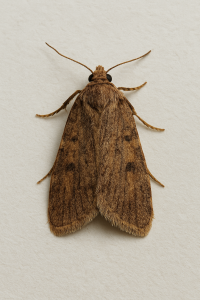
Brown House Moths are recognised by their:
Mottled brown, gold, and bronze forewings
Small dark flecks or spots across the wings
Slightly shiny or metallic appearance in good light
Slim, delicate bodies
Size: 8–14 mm wingspan, slightly larger than the Common Clothes Moth
Behaviour
Attracted to dry foodstuffs such as cereals, flour, birdseed, and biscuits
Larvae also feed on natural fibres, carpets, rugs, and organic debris
Most active during summer but can thrive year-round in heated homes
Often found in dark, undisturbed places such as cupboards, lofts, and behind skirting boards
Adults are weak fliers and tend to flutter close to walls and ceilings
Life Stages
Egg (1–3 weeks)
Tiny, pale, oval eggs deposited in crevices, food debris, or on fabrics
Females lay up to 200 eggs, enabling rapid population growth
Larva (2–5 months)
Cream-coloured caterpillars with brown heads
The main damaging stage
Feed on a wide variety of organic materials, including:
Flour, grains, cereals, pasta
Pet food and birdseed
Wool, feathers, carpets, felt
Stored food debris and crumbs
Can cause irregular holes in fabrics or ruin stored foods
Pupa (2–8 weeks)
Pupate in silk-lined cocoons, usually hidden in cracks or under furniture
Cocoons often contain debris from food or fabrics
Adult (lifespan: 2–4 weeks)
Adults do not feed but exist purely to mate and lay eggs
Thrive indoors all year due to central heating
Impact
Brown House Moths can be both a food pest and a textile pest, depending on where they establish.
Positive Impacts
Although rarely beneficial in the home, they do contribute to:
Natural decomposition outdoors by feeding on organic debris
Recycling of detritus in natural environments
Negative Impacts
Damage to stored foods, especially cereals, grains, flour, rice, birdseed
Damage to carpets, woollen items, upholstery, and textiles
Contamination of food stores with webbing, frass (droppings), and larvae
More adaptable and destructive than Common Clothes Moths
Can persist in homes year-round if conditions are warm and undisturbed
Their presence indoors often indicates:
Old, spilled or forgotten dry food in cupboards
Unsealed pet food or birdseed
Dust, debris, and organic material under furniture
Wool or natural-fibre carpets in low-traffic areas
A long-standing, undetected infestation
Removal and Control
1. Identify and Remove the Source
Check:
Cupboard corners and dry food stores
Old birdseed, baking ingredients, unopened flour or cereal
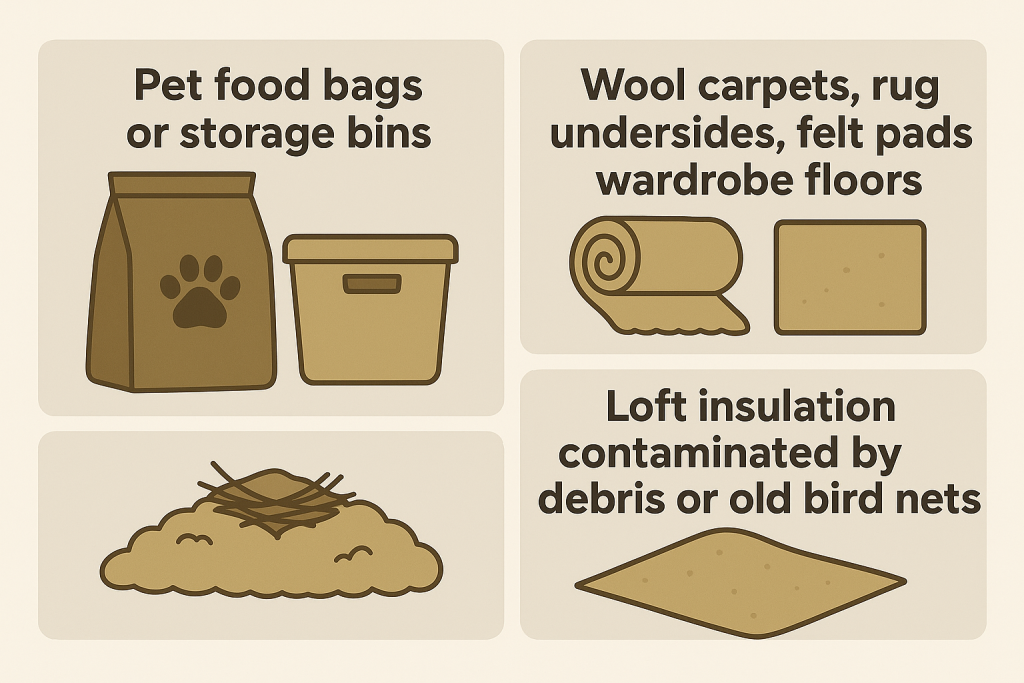
Pet food bags or storage bins
Wool carpets, rug undersides, felt pads, wardrobe floors
Loft insulation contaminated by debris or old bird nests
Throw away infested items immediately.
2. Improve Food Storage
Store grains, cereals, pasta, and baking ingredients in airtight containers
Keep pet food sealed when not in use
Clean up crumbs and spills promptly
3. Textile Protection
Regularly vacuum carpets, especially edges and low-traffic areas
Store wool and natural-fibre items in sealed containers or garment bags
Consider cedar, lavender pouches, or moth deterrent products
4. Physical Prevention
Fit flyscreens to windows and vents to reduce adult moth entry
Keep cupboards and storage areas clean and dry
Seal cracks in cupboards, skirting boards, and floorboards
5. Indoor Control
Use pheromone traps to monitor and reduce adult males
Vacuum thoroughly to remove larvae and cocoons
In stubborn cases, use a residual insecticide spray or professional treatment
6. Professional Intervention
Recommended when:
Infestations persist despite cleaning
Damage is extensive or widespread
A business (e.g., bakery, restaurant) needs guaranteed elimination
There is suspected contamination in hard-to-reach areas such as lofts or floor voids
Although Brown House Moths are often introduced through contaminated food, second-hand items, or natural fibres, flyscreens can still help reduce the number of adults entering your home—especially in the evenings when they are attracted to indoor lighting.
✅ How They Can Help
Prevent entry:
Flyscreens block adult moths from flying indoors at night when drawn to light through open windows or doors.
Reduce risk of new infestations:
By limiting the number of adult moths that enter, you reduce the chances of them laying eggs in kitchens, cupboards, carpets, or storage areas.
Improve overall hygiene:
Screens also keep out other flying insects that may contaminate food, clothing, or surfaces.
❌ However:
Flyscreens alone will not eradicate an active Brown House Moth infestation. They cannot prevent:
Larvae feeding on stored food products or natural fibres
Eggs already laid inside cupboards, drawers, or loft spaces
Moths emerging from within the home, such as from carpets or food stores
Effective long-term control requires combining flyscreens with good housekeeping practices:
Cleaning and sealing all food items in airtight containers
Removing or disposing of any infested food or materials
Regular vacuuming, especially in dark or low-traffic areas
Thorough cleaning of cupboards, pantry shelves, and storage spaces
If you require professional help, head to the British Pest Control Association to find a local pest controller near you.
Explore the range of solutions we have available to help you prevent and manage pest problems effectively. We have a few products detailed below that have been proven to assist with moth problems, but explore our full range here. Whether you’re dealing with ants, rodents, or other common pests, our practical advice and proven treatments can help you protect your home and maintain a cleaner, healthier environment.
-
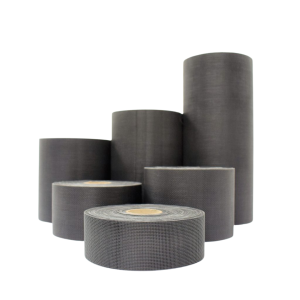
Fibreglass Fly Mesh & Insect Mesh – 18×16 Gauge
£7.10 – £168.00Price range: £7.10 through £168.00 -
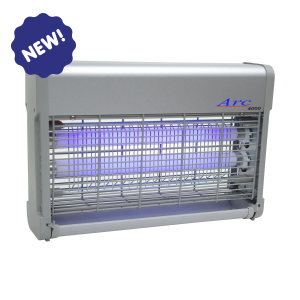
Arc LED 12
£55.00 Price including VAT: £66.00 -
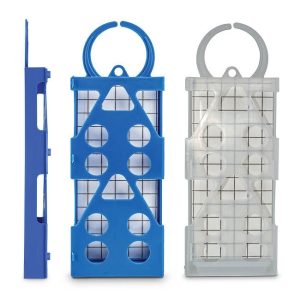
Eradisect Moth Hanger
£6.05 – £7.84Price range: £6.05 through £7.84 -
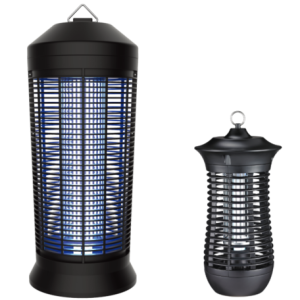
Lanterns
£27.00 – £62.00Price range: £27.00 through £62.00 -
Sale!
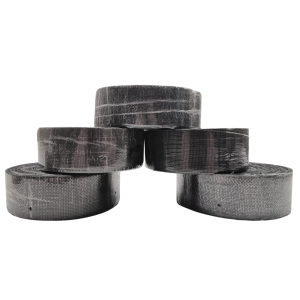
SPECIAL – End of Roll – 45mm to 65mm Widths
£10.00 – £40.00Price range: £10.00 through £40.00