
Hornet
vespa crabro
Basic Overview
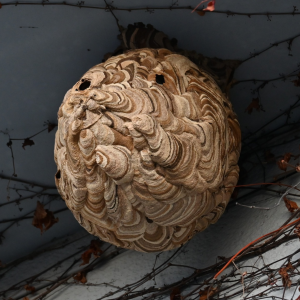
Hornets are large, social wasps commonly found in the UK. Adults are brown and yellow with a distinctive striped abdomen, while colonies are usually hidden in hollow trees, wall cavities, or roof spaces. They are mostly active in summer, hunting other insects and foraging for sweet foods, and are most noticeable when flying around gardens or near their nests.
Identification and Characteristics
Appearance
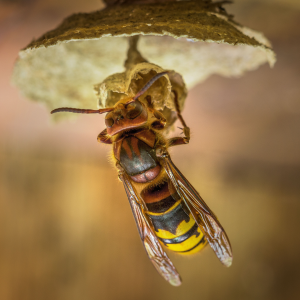
These insects are large, usually measuring 20–35 mm in length. Adults have a distinctive brown and yellow striped abdomen, with a reddish-brown head and prominent mandibles. Their bodies are robust and strong, allowing them to fly long distances while hunting or foraging. Queens are noticeably larger than worker hornets, and the wings are semi-transparent, folding along the body when at rest.
Behaviour
They are most active outdoors in gardens, woodlands, and near trees, but they may also nest in hollow walls or roof spaces. Colonies are social, with a single queen laying eggs that develop into workers over several weeks. Hornets hunt other insects for food and are also attracted to sweet foods like sap, fruit, and occasionally sugary human foods.
While adults can be defensive near their nests, they generally fly calmly while foraging. Colonies grow throughout summer, peaking in late summer and early autumn, before dying off in colder months except for new queens that hibernate to start colonies the following year.
Life Stages
Hornets have a complete metamorphosis, passing through four main stages:
Egg – Laid by the queen inside the nest in spring and early summer. Eggs are tiny, white, and oval-shaped.
Larva – Hatch from eggs after a few days; larvae are legless, white grubs that are fed by worker hornets.
Pupa – Larvae spin a silky cocoon inside the nest and develop into pupae. During this stage, adult features like wings and stripes form.
Adult – Fully developed hornets emerge from pupae to take on roles in the colony: workers forage and defend, while the queen focuses on laying eggs.
The colony grows throughout summer, peaking in late summer, and dies off in autumn except for newly mated queens, which hibernate to start colonies the following spring.
Impact
Hornets have a mixed impact on the environment and on human spaces. While they are sometimes seen as pests, they also play important ecological roles. Problems mainly occur when nests are located near homes or areas with frequent human activity.
Positive Impacts
Hornets are natural predators of many garden and crop pests.
Adults hunt insects such as flies, caterpillars, and other small arthropods, helping control pest populations.
By feeding on fallen fruit and insects, they contribute to nutrient cycling in ecosystems.
Hornets are occasionally studied in entomology and ecology research, providing insight into social insect behavior and colony dynamics.
Negative Impacts
Hornets can become a nuisance or hazard when nests are close to human activity.
They can sting defensively if disturbed, which may pose a risk to people allergic to insect stings.
Large nests near homes, schools, or outdoor leisure areas can cause safety concerns.
Hornets may also scavenge for sweet foods outdoors, sometimes approaching human food and drinks.
Their presence often requires careful management or professional removal to prevent stings and reduce conflicts.
Removal and Control
Hornets are an important part of the ecosystem, but nests located near homes or high-traffic areas can pose a risk to people, particularly if someone is allergic to stings. Managing hornets requires caution and a combination of preventive and professional measures.
Avoid Disturbing Nests
Hornets are generally not aggressive unless they feel threatened. Approaching or attempting to remove a nest without proper protection can provoke defensive behaviour. If you spot a nest, keep a safe distance, and ensure children and pets do not go near it.
Professional Removal
For nests in accessible areas such as roof spaces, wall cavities, attics, or near outdoor living spaces, it is strongly recommended to contact a licensed pest control professional. Experts have the right equipment, protective clothing, and knowledge to remove or treat nests safely. They may use insecticidal treatments or carefully remove the nest depending on its size and location. Treatments are often carried out in the evening when hornets are less active and more likely to be inside the nest.
Preventive Measures
Preventing hornets from establishing nests in or around buildings is an effective way to reduce risk:
Seal gaps, cracks, and openings in walls, roofs, and eaves.
Check lofts, sheds, and other potential nesting sites before spring, when queens are searching for places to start new colonies.
Reduce attractants by keeping food and drinks covered outdoors, particularly sweet items and fallen fruit, which may draw foraging hornets.
Monitoring and Maintenance
Regularly inspect areas around your home and garden for early signs of hornet activity. Small colonies are easier and safer to manage than large, fully established nests. Early detection can prevent nests from becoming a larger problem later in the summer.
Safety Considerations
Hornets can deliver a painful sting, and multiple stings may occur if a nest is disturbed. People with known allergies to insect stings should take extra precautions and seek medical advice if stung. Wearing protective clothing and maintaining a safe distance is essential during any DIY control attempts, though professional removal is always the safest option.
By combining careful observation, preventive measures, and professional intervention when necessary, hornets can be managed effectively, balancing human safety with the ecological benefits these insects provide.
Although hornets are naturally present outdoors—particularly in gardens, woodlands, and around flowering plants or fallen fruit—certain preventive measures can help reduce their presence near homes and outdoor living areas.
✅ How They Can Help
Prevent entry to buildings:
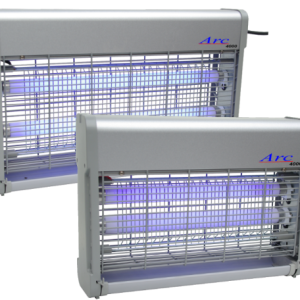
Screens, sealed gaps, and properly fitted doors and windows act as a physical barrier, helping prevent hornets from entering lofts, attics, wall cavities, or other indoor spaces while still allowing ventilation.
Reduce human-hornet encounters:
By limiting access to buildings and outdoor dining areas, you reduce the likelihood of defensive hornet behaviour near people, pets, or high-traffic areas.
Support overall pest management:
Physical barriers, combined with good garden and home practices—such as removing fallen fruit or covering sugary foods outdoors—also help discourage other foraging insects from approaching human spaces.
❌ However
Barriers and preventive measures alone will not resolve an existing hornet nest problem. They cannot prevent:
Nests already established in lofts, walls, trees, or roof spaces
Foraging hornets flying near outdoor areas if attracted by food sources
Increased activity around late-summer colonies or new queens establishing nests nearby
Effective long-term control requires a combination of strategies, including:
Sealing potential nesting sites in walls, lofts, and eaves
Reducing attractants such as uncovered drinks, sweet foods, and fallen fruit
Maintaining a safe distance from nests and ensuring children and pets do the same
Contacting licensed pest control professionals for removal if nests are located in dangerous or high-traffic areas
By combining physical barriers, environmental management, and professional intervention when necessary, hornets can be managed safely while preserving their ecological benefits.
If you require professional help, head to the British Pest Control Association to find a local pest controller near you.
Explore the range of solutions we have available to help you prevent and manage pest problems effectively. Whether you’re dealing with ants, rodents, or other common household pests, our practical advice and proven treatments can help you protect your home and maintain a cleaner, healthier environment.