Ants
Formicidae
Basic Overview
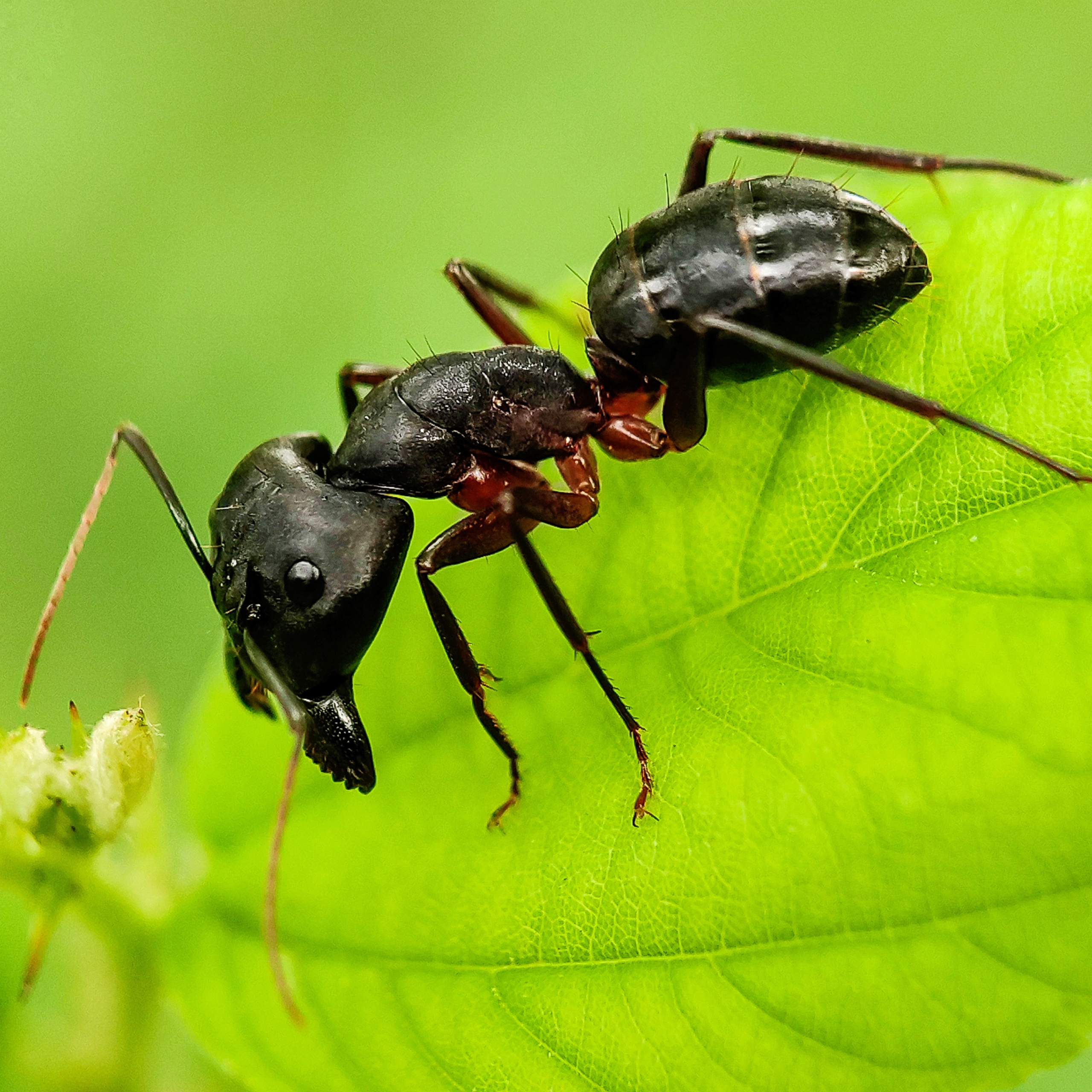
There are over 50 types of ants in the UK. The most common is the black garden ant (lasius niger). Ants are one of the most prolific animals and play an important part of ecosystems worldwide, that affect fauna and flora.
Ants can be bothersome – especially if they’ve decided your kitchen is the place to gather their food! Whilst precautions and actions should be taken on such occasions, it is best if possible to leave them be if they are simply in your garden. They are an important part of the biodiversity in a thriving garden.
Identification and Characteristics
| Species | Scientific Name | Appearance | Habitat & Notes |
|---|---|---|---|
| Black garden ant | Lasius niger | Shiny black or dark brown, 3–5 mm long. | Most common species; nests in soil, under paving stones, and lawns. Workers forage indoors for sweet foods. |
| Yellow meadow ant | Lasius flavus | Yellowish-brown, smaller (2–4 mm). | Nests in lawns and meadows; less likely to invade houses. Often forms small soil mounds. |
| Red ant | Myrmica rubra | Reddish-brown, 4–6 mm. | Can sting; prefers damp soil and garden areas. |
| Pharaoh’s ant | Monomorium pharaonis | Pale yellow, tiny (2 mm). | Tropical indoor species; colonies in warm buildings. Harder to control, often in hospitals or blocks of flats. |
| Roger’s ant | Hypoponera punctatissima | Small, brown. | Often in heated buildings; prefers damp crevices. |
Life Stages
The ant life cycle, typical of the common Black Garden Ant (Lasius niger), involves complete metamorphosis through four stages.
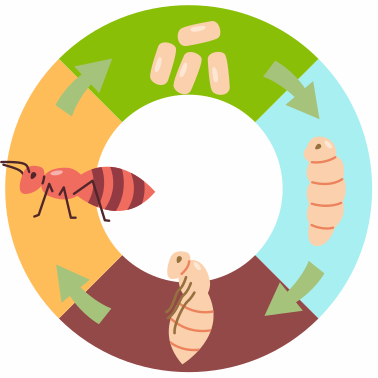
Starting as tiny, sticky eggs, they hatch in about 1 to 2 weeks into white, maggot-like larvae. These larvae are fed and cared for by worker ants, growing rapidly for another 2 to 4 weeks before transforming into a pupa, either enclosed in a cocoon or “naked.” The full development from egg to adult worker takes roughly 6 to 10 weeks.
Seasonally, ants are dormant during the cold UK winter months (November–February). They become active in the spring (March–May), with worker ants emerging to forage for food and restart the colony’s growth.
Activity peaks in summer (June–September), culminating in the nuptial flights (or ‘Flying Ant Day’), where winged males and virgin queens swarm to mate, ensuring the continuation of the species before the colony prepares for dormancy in the autumn.
Behaviour and Colony Structure
Colonies are highly organised and led by a Queen (or a couple, depending on the species). Workers are typically sterile females, who forage for food and care for young. Ants communicate through pheromones, leaving scent trails for others to food.
Impact
Ants rarely cause any physical structural damage, but infestations are unpleasant and unhygienic. Here’s a table showing potential issues.
| Setting | Potential Issues |
|---|---|
| Homes | Contaminate food, nuisance infestations, especially in kitchens. |
| Gardens | Disturb soil around roots and lawns; can protect aphids (which produce honeydew). |
| Hospitals / Businesses | Pharaoh’s ants can spread pathogens. |
How to deal with Ants
Prevention
If you find yourself with an ant problem, here are a few actions you can take before any treatments.
- Eliminate food sources – ants are primarily attracted to sweet & sticky food*. Make sure all food (including pet food!) is in airtight containers.
- Keep clean – wipe up spills, crumbs and sticky residues immediately. Ants follow invisible hormone trails, so use a solution of 50/50 white vinegar and water to clean surfaces. It will confuse the worker ants!
- Seal Entry Points – Follow the ant trail to discover how they’re getting in. It could be cracks in skirting boards, gaps around windows or doors etc. Use caulk, filler, or plaster to seal these gaps up tight!
- Control Moisture – Ants love damp environments. This means you need to fix any leaky taps or pipes that may be providing a water source near their entry points.
Treatment
1. DIY Control (for black garden ants and similar)
Use ant bait stations or gel baits containing slow-acting insecticides (e.g., boric acid, spinosad, or imidacloprid).
Ants carry bait back to the nest, killing the colony gradually.
Avoid killing foragers directly — it disrupts pheromone trails and reduces bait uptake.
2. Natural / Non-chemical Methods
Boiling water poured into nest entrances (temporary effect).
Diatomaceous earth or cinnamon along entry points (repellent).
White vinegar or lemon juice breaks pheromone trails indoors.
3. Professional Pest Control
Recommended for:
Large or persistent infestations.
Pharaoh’s ants or species nesting in walls.
Professionals may use targeted baits or residual sprays.
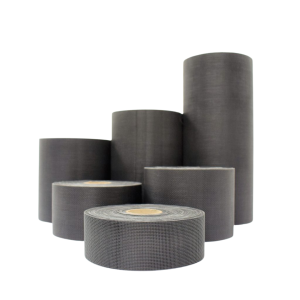
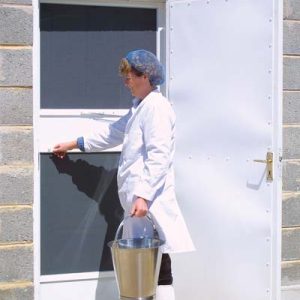
Another option is to fit flyscreens to your windows and doors. Although they’re mainly designed to keep out flying insects like flies and wasps, they can also help reduce the number of ants getting indoors. Flyscreens act as an extra barrier, making it harder for ants to find their way in through open windows or small gaps around the frames. When combined with other simple measures—such as sealing cracks, keeping food stored away, and cleaning up spills—they can make a noticeable difference in preventing ant problems.
✅ How they can help:
Reduce entry during foraging: If you often keep windows or patio doors open (especially near kitchens), flyscreens stop flying insects — and may incidentally block crawling ants trying to enter that way.
Limit entry points: A tight, well-fitted screen with sealed edges may discourage ants using those gaps as access routes.
Hygiene benefit: Keeps out other pests (flies, wasps, mosquitoes), so it supports overall pest prevention.
❌ However:
Ants are tiny and persistent — they exploit:
Cracks in masonry
Gaps under doors and window frames
Utility pipe entries
Electrical conduits
Skirting board gaps
Even high-quality flyscreens don’t seal these areas fully.
If an ant colony is nearby, workers can easily find alternate entry routes.
If you require professional help, head to the British Pest Control Association to find a local pest controller near you.
Explore the range of solutions we have available to help you prevent and manage pest problems effectively. Whether you’re dealing with ants, rodents, or other common household pests, our practical advice and proven treatments can help you protect your home and maintain a cleaner, healthier environment.