Flies
diptera
Basic Overview
Flies are common insects found throughout the UK and are best known for their ability to fly, rapid breeding, and close association with people, food, and waste. Some species are harmless and largely outdoor-based, while others are considered pests because they enter buildings, spread bacteria, or become a nuisance in large numbers.
Most flies have a short life cycle, moving from egg to larva (maggot), then pupa, and finally adult. Because they reproduce quickly and are attracted to warmth, food, moisture, and light, fly populations can increase rapidly—particularly during warmer months.
Flies play important roles in nature, such as breaking down organic matter and pollinating plants, but indoors they are often unwanted due to hygiene concerns.
Tip: If a fly is buzzing around food, it’s likely a house fly or blowfly. If it’s hovering near the ceiling, think lesser house fly. If it’s appearing suddenly in colder months, cluster fly is the prime suspect.
Identification and Characteristics
Appearance
Flies vary widely in size and colour, but most share several common physical features that make them easy to recognise.
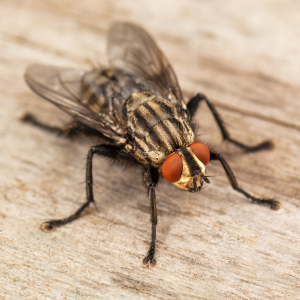
Adult flies typically have one functional pair of wings, with a second reduced pair called halteres that help with balance during flight. Their bodies are usually soft and lightweight, allowing for quick movement and agile flying.
Most species have large, prominent compound eyes, giving them excellent vision and rapid reaction times. Antennae are generally short and stubby, unlike those of moths or beetles.
Colouration ranges from grey, black, and brown to metallic blue or green, depending on the species. Some flies appear smooth, while others may have fine hairs on the body or legs. Sizes range from very small indoor flies to much larger species such as crane flies.
Behaviour
Flies are highly active insects and are best known for their fast, erratic flight and ability to quickly change direction.
Most species are attracted to warmth, light, moisture, and food sources, which is why they commonly enter homes and commercial buildings during warmer months. Indoors, flies are often seen resting on walls, ceilings, windows, or near light sources.
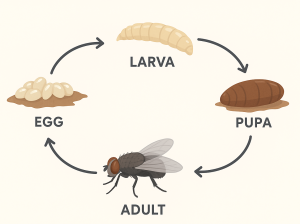
Flies reproduce quickly and undergo a complete life cycle of egg, larva (maggot), pupa, and adult. Eggs are usually laid in decaying organic matter, food waste, animal waste, or damp environments, allowing populations to build rapidly if conditions are suitable.
Some species are primarily outdoor-based and only enter buildings accidentally, while others actively seek indoor spaces for food, breeding, or shelter—particularly during seasonal changes.
Life Stages
Flies undergo complete metamorphosis, meaning they pass through four distinct life stages. This allows them to reproduce quickly and adapt well to changing environments.
Egg
Female flies la
y their eggs in locations that provide food for the larvae once they hatch. Common sites include decaying organic matter, food waste, animal waste, compost, or damp areas.
Eggs are usually very small and pale, often laid in batches, and can hatch within hours to a few days, depending on temperature and species.
Larva (Maggot)
After hatching, the larvae—commonly known as maggots—feed continuously on the surrounding material. This stage is focused entirely on growth.
Maggots are legless, pale or cream-coloured, and live hidden within their food source. This stage can last from several days to a few weeks.
Pupa
Once fully grown, the larva forms a pupa, developing a protective casing around itself. Inside, the fly undergoes major transformation into its adult form.
Pupae are often found in soil, cracks, crevices, or nearby sheltered areas and do not feed during this stage.
Adult
The adult fly emerges from the pupa fully formed and ready to fly. Most adult flies focus on feeding and reproduction and may live from a few days to several weeks, depending on the species and conditions.
Because each stage can develop rapidly in warm environments, fly populations can increase quickly if breeding sites are not controlled.
Impact
Flies have a mixed impact on the environment and on human spaces. While often viewed as pests, many species play important ecological roles. Problems tend to arise when flies move indoors or appear in large numbers.
Positive Impacts
In natural environments, flies are highly beneficial.
Many species help break down decaying organic matter, such as plant material, animal remains, and waste. This recycling process returns nutrients to the soil and supports healthy ecosystems.
Some flies act as pollinators, particularly for wild plants and crops that rely on insects other than bees. Hoverflies, for example, are important pollinators in gardens and farmland.
Fly larvae also form a vital part of the food chain, providing nourishment for birds, amphibians, reptiles, and other insects.
Negative Impacts
In homes and commercial buildings, flies can create hygiene and nuisance issues.
Certain species are capable of spreading bacteria and pathogens by moving between waste, food, and food preparation surfaces. This makes them a concern in kitchens, food businesses, and healthcare settings.
Flies can contaminate food and surfaces through regurgitation and droppings, increasing the risk of food spoilage and illness.
Large numbers of flies can also be a sign of underlying problems, such as poor waste management, damp conditions, or nearby breeding sites.
Biting species may cause painful bites and irritation, particularly to people and animals in rural or outdoor environments.
Removal and Control
Effective fly control focuses on prevention first, supported by targeted removal where needed. Because flies breed quickly, addressing the cause of the problem is more effective than dealing with adult flies alone.
Prevention
Preventing flies from entering or breeding indoors is the most reliable long-term solution.
Good hygiene is essential. Food should be kept covered, waste bins emptied regularly, and spillages cleaned promptly. Damp areas, drains, and standing water should be checked and maintained, as these can attract certain species.
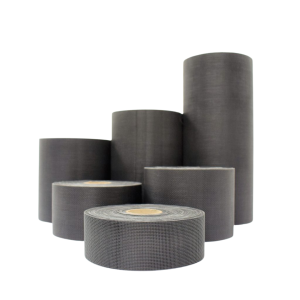
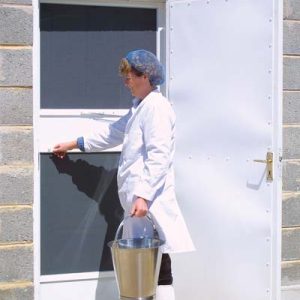
Physical barriers play a key role. Installing flyscreens on windows and doors allows ventilation while preventing flies from entering, making them particularly effective in homes, food premises, and commercial buildings.
Reducing outdoor attractants also helps. Keeping bins sealed, managing compost correctly, and removing pet or animal waste can significantly reduce nearby breeding sites.
Removal
If flies are already present indoors, short-term removal may be necessary alongside preventative measures.
Manual removal, such as swatting or vacuuming, can reduce numbers quickly but does not address the source.
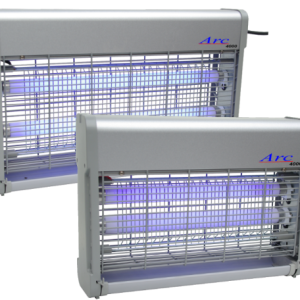
Traps may help monitor or reduce adult fly populations, especially in problem areas.
Targeted insecticides can be used where appropriate, though these should be applied carefully and are not suitable for all environments.
Long-Term Control
Sustainable fly control relies on breaking the breeding cycle and preventing re-entry. Identifying the species involved can help determine where flies are coming from and which control measures will be most effective.
Non-chemical methods, particularly physical exclusion and good housekeeping, provide ongoing protection and are often preferred in sensitive environments such as kitchens and food preparation areas.
Although flies are naturally present outdoors—particularly around gardens, waste, and organic matter—certain preventive measures can help reduce their presence indoors, especially during warmer months when activity levels increase.
✅ How They Can Help
Prevent entry to buildings:
Flyscreens fitted to windows, doors, and vents act as a physical barrier, helping prevent flies from entering homes, commercial premises, and food preparation areas while still allowing airflow and ventilation.
Reduce hygiene risks:
By limiting the number of flies that enter indoor spaces, you reduce the likelihood of food contamination and the spread of bacteria onto surfaces, particularly in kitchens and dining areas.
Improve overall pest control:
Physical barriers, combined with good hygiene and waste management, also help discourage other flying insects from accessing indoor spaces.
❌ However
Flyscreens and barriers alone will not resolve an existing fly problem. They cannot prevent:
Flies that have already entered or emerged indoors
Flies breeding in internal or nearby external sources such as drains, bins, or damp organic material
Increased activity during peak seasonal conditions
Effective long-term control requires combining physical barriers with good environmental management, including:
Regularly emptying and sealing waste bins
Keeping food covered and cleaning spills promptly
Managing compost, drains, and damp areas
Identifying and removing nearby breeding sites
Using traps or professional control where fly numbers are high
If you require professional help, head to the British Pest Control Association to find a local pest controller near you.
Explore the range of solutions we have available to help you prevent and manage pest problems effectively. We have a few products detailed below that have been proven to assist with bird problem, but explore our full range here. Whether you’re dealing with ants, rodents, or other common pests, our practical advice and proven treatments can help you protect your home and maintain a cleaner, healthier environment.