Gnats
diptera
Basic Overview
Gnats are tiny, flying insects commonly found indoors and outdoors. They are often attracted to damp soil, decaying organic matter, and overripe fruits. While most species do not bite, some, like biting midges, can feed on humans and animals. Gnats reproduce quickly in warm, humid environments, making them a common nuisance in kitchens, gardens, and around houseplants. Despite their small size, they play a role in pollination and the decomposition of organic material.
Identification and Characteristics
Appearance
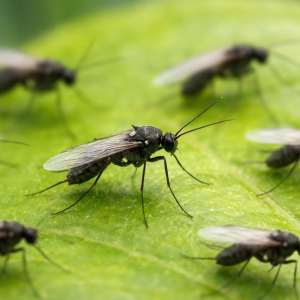
Gnats are tiny flying insects, usually measuring 1–3 mm in length, with delicate, narrow wings. They have slender, lightweight bodies that allow them to hover and fly short distances. Their coloration is typically dark grey to black, though some species may appear slightly translucent. Unlike moths, gnats do not have a distinctive wing pattern, and their long legs and thread-like antennae are often more noticeable than their small bodies. Larvae, depending on the species, are usually small, pale, and worm-like, often found in damp soil, rotting vegetation, or decaying organic matter.
Behaviour
Gnats are most active in warm, moist environments, both indoors and outdoors. Non-biting species are attracted to overripe fruits, houseplants, compost, and other decaying organic matter, while biting species (like midges) may feed on humans and animals. Females lay eggs in suitable moist habitats, and larvae feed on organic material, completing their life cycle in a few weeks under favorable conditions.
Adults typically fly short distances in swarms or near their breeding sites. Populations can grow quickly if damp, nutrient-rich areas are abundant. Indoors, infestations are often noticed around potted plants, kitchen scraps, or fruit bowls, particularly in warm and humid months.
Life Stages
Gnats undergo complete metamorphosis, passing through four stages:
Egg: Female gnats lay tiny eggs in damp soil, decaying organic matter, or overripe fruits. Depending on the species, eggs hatch within a few days.
Larva: The larvae are small, worm-like, and pale in color. They feed on organic material in soil, compost, or rotting plant matter. This stage can last from a few days to a couple of weeks, depending on conditions.
Pupa: After the larval stage, gnats enter the pupal stage, forming a protective casing. Inside, they develop into adults. This stage usually lasts a few days.
Adult: Adults are tiny flying insects with slender bodies and delicate wings. They are often seen hovering near breeding sites, overripe fruits, or houseplants. Adults typically live for 1–2 weeks, during which time females lay eggs to continue the cycle.
Impact
Gnats have a mixed impact on the environment and human spaces. While often considered nuisances, they also have ecological roles. Problems mainly occur when populations grow large, particularly in homes, kitchens, and around potted plants.
Positive Impacts
In natural environments, gnats play a role in pollination and nutrient recycling.
Their larvae feed on decaying organic matter, soil fungi, and plant material, helping break down and decompose nutrients back into the ecosystem.
While less noticeable than some other insects, this decomposition contributes to soil health and ecosystem balance.
Certain gnat species are also used in scientific research, particularly studies on ecology, pollination, and pest control.
Negative Impacts
In homes, kitchens, and indoor plant areas, gnats can become persistent nuisances.
Non-biting gnats are attracted to overripe fruits, damp soil, and compost, while biting species (like midges) can feed on humans and pets.
Large numbers can swarm indoors, particularly in warm and humid conditions, creating irritation and hygiene concerns.
Infestations often indicate excess moisture, overwatered plants, or improperly stored food.
While gnats do not generally cause structural damage, their rapid reproduction makes them difficult to control once populations establish indoors.
Removal and Control
Gnats can be controlled through a combination of preventive measures, habitat management, and targeted treatments. Consistent action is key to reducing populations both indoors and outdoors.
✅ Prevent Entry and Breeding
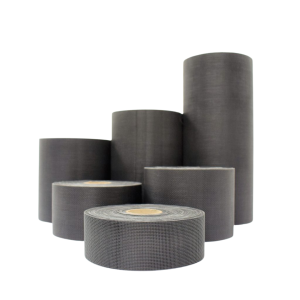
Install fine mesh flyscreens on windows, doors, and vents to limit adult gnats entering your home.
Keep kitchens, pantries, and indoor plant areas clean and dry. Wipe up spills and remove overripe fruits promptly.
Avoid overwatering houseplants, and ensure pots have proper drainage to prevent moist soil, which attracts fungus gnats.
✅ Reduce Breeding Sites
Dispose of compost, rotting fruits, and decaying vegetation promptly.
For indoor plants, let the top layer of soil dry between waterings to discourage larvae.
Clean drains, sink traps, and garbage bins regularly to remove organic buildup.
✅ Control Existing Populations
Sticky traps: Yellow sticky cards attract flying adults and reduce numbers.
Biological controls: Beneficial nematodes or predatory mites can target gnat larvae in soil.
Household solutions: A mixture of apple cider vinegar and a few drops of dish soap in a shallow dish traps adults.
Targeted insecticides: Use indoor-safe sprays only if infestations are severe, following all safety instructions.
Tips for Success
Consistency is key—gnats reproduce rapidly, so repeated action is often necessary.
Combining sanitation, habitat management, and traps provides the best results.
Regularly inspect indoor plants and kitchen areas, especially during warm, humid months.
Although gnats are naturally present in damp soil, decaying organic matter, overripe fruits, and indoor plants—particularly in kitchens, compost areas, and houseplants—certain preventive measures can help reduce their presence indoors, especially in warm and humid months.
✅ How They Can Help
Prevent entry to buildings:
Flyscreens fitted to windows, doors, and vents act as a physical barrier, helping prevent adult gnats from entering homes, kitchens, and indoor plant areas while still allowing airflow and ventilation.
Reduce breeding risks:
By limiting the number of gnats that enter indoor spaces, you reduce the likelihood of larvae developing in damp soil, compost, or decaying fruits, which helps keep indoor areas cleaner.
Support overall pest control:
Physical barriers, combined with good hygiene and proper plant care, also help discourage other small flying pests, such as fruit flies or fungus gnats, from establishing indoors.
❌ However
Flyscreens and barriers alone will not resolve an existing gnat problem. They cannot prevent:
Gnats that have already entered or emerged indoors
Eggs or larvae breeding in plant soil, compost, or decaying organic matter
Increased activity if multiple breeding sites exist indoors
Effective long-term control requires combining physical barriers with environmental management, including:
Reducing excess moisture in plant soil and indoor areas
Disposing of overripe fruits, compost, and decaying organic matter promptly
Cleaning kitchen surfaces, drains, and plant areas to remove potential food sources
Monitoring for larvae and adult gnats using sticky traps or professional pest control if infestations are severe
If you require professional help, head to the British Pest Control Association to find a local pest controller near you.
Explore the range of solutions we have available to help you prevent and manage pest problems effectively. Whether you’re dealing with ants, rodents, or other common household pests, our practical advice and proven treatments can help you protect your home and maintain a cleaner, healthier environment.