
Clothes Moth
Tineola bisselliella
Basic Overview
Clothes moths are tiny, inconspicuous insects that have earned a notorious reputation for causing significant damage to natural fibres such as wool, silk, fur, and feathers. While adult moths themselves do not feed on fabrics, it is their larvae that are responsible for the destruction, quietly chewing through valuable clothing, upholstery, and other household items made from natural materials.
These pests are particularly common in homes across the UK, where they thrive in warm, dark, and undisturbed environments such as wardrobes, drawers, storage boxes, and even behind skirting boards or under carpets. Because they prefer areas that are rarely disturbed, infestations can go unnoticed for months, making it easy for the larvae to multiply and cause extensive damage before detection. Understanding their behaviour and the conditions that encourage their growth is crucial for effective prevention and control.
Identification and Characteristics
Appearance
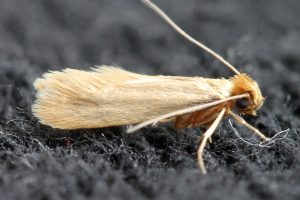
Clothes moths are small, inconspicuous insects, but they have distinctive features that make them identifiable. They are recognised by their pale golden or beige forewings, which often have a subtle silky sheen, giving them a delicate, almost translucent look. At the top of their heads, they have small reddish-golden hairs, which are particularly noticeable in the Webbing Clothes Moth. Their bodies are slim and fragile, designed more for crawling than sustained flight. Adult clothes moths are tiny, with a wingspan of just 6–8 mm, making them smaller than common brown house moths.
Behaviour
The real damage is caused by the larvae, which feed on natural fibres including wool, silk, fur, feathers, and even carpets. Clothes moths prefer warm, quiet, and undisturbed locations such as wardrobes, drawers, lofts, and behind skirting boards, where they can thrive unnoticed. Adult moths are weak fliers, often fluttering close to walls, ceilings, or furniture rather than flying freely across rooms. Infestations can occur throughout the year, especially in heated homes, though moth activity typically peaks during the warmer months. Because of their discreet behaviour, early detection is challenging, and infestations can quietly escalate if preventative measures are not taken.
Life Stages
Clothes moths undergo complete metamorphosis, consisting of four distinct stages:
1. Egg
Eggs are tiny, white, and difficult to see with the naked eye
Laid directly on or near natural fibres such as wool, carpets, or clothing
Hatch in 4–10 days, depending on temperature and humidity
2. Larva (Caterpillar)
The most destructive stage
Larvae are creamy white with a brown head
Feed on natural fibres including wool, silk, fur, feathers, and carpets
Can remain in this stage for 1–6 months, or longer in cooler conditions
Create webbing or silk tunnels for protection while feeding
3. Pupa
Larvae spin a cocoon using silk and fibres from the material they’ve been feeding on
Pupal stage lasts 2–4 weeks
Usually hidden in dark, undisturbed areas such as wardrobes or behind skirting boards
4. Adult Moth
Small, pale golden-brown moth
Adults do not feed and cause no direct damage
Live for around 2–4 weeks, during which they mate and lay eggs
Weak fliers, often seen fluttering near walls or inside wardrobes
Impact
Clothes moths are common household pests in the UK whose larvae damage natural fibres such as wool and carpets, while also playing a minor role in natural decomposition outdoors.
Positive Impacts
Contribute to the natural breakdown of animal-based materials in outdoor environments
Help recycle organic fibres such as fur and feathers back into the ecosystem
Provide a food source for birds, spiders, and other insect-eating species
Presence can highlight poor storage, ventilation, or cleaning habits in the home
Pose no direct health risk to humans — they do not bite, sting, or spread disease
Negative Impacts
Larvae damage natural fibres such as wool, silk, fur, feathers, carpets, and upholstery
Create holes, thinning, and irreversible damage to clothing and soft furnishings
Can cause significant financial loss, particularly to high-value or sentimental items
Infestations often go unnoticed due to their preference for dark, undisturbed areas
Thrive year-round in centrally heated UK homes, making control more difficult
Stored and rarely used clothing is especially vulnerable to attack
Their presence indoors often indicates poor storage conditions, infrequent cleaning, low disturbance of fabrics, or an abundance of natural fibres, particularly in dark, warm areas such as wardrobes, drawers, and carpet edges.
Removal and Control
Identify the source
Locate affected items and areas, focusing on wardrobes, drawers, carpets, rugs, and other undisturbed spaces containing natural fibres.
Thorough cleaning
Vacuum floors, carpet edges, wardrobes, skirting boards, and storage areas regularly. Dispose of vacuum contents immediately to prevent reinfestation.
Wash or treat affected items
Launder washable items at 60°C, dry-clean delicate fabrics, or freeze infested clothing for at least 72 hours to kill eggs and larvae.
Improve storage
Store seasonal or rarely used clothing in airtight containers or sealed garment bags to prevent moth access.
Use pheromone traps
Clothes moth traps help monitor adult activity and reduce breeding, but should be used as part of a wider control strategy rather than a standalone solution.
Natural deterrents
Cedarwood, lavender, or bay leaves may help repel moths when used in drawers and wardrobes, though they do not eliminate infestations.
Seal entry points
Fit flyscreens to windows and vents to reduce the chance of adult moths entering the home from outside.
Professional treatment
For widespread or persistent infestations, professional pest control services can apply targeted treatments safely and effectively.
Although clothes moths are most commonly introduced through infested clothing, carpets, upholstery, or second-hand textiles, flyscreens can still help reduce the number of adult moths entering your home—particularly during the evening when they are attracted to indoor lighting.
✅ How They Can Help
Prevent entry:
Flyscreens act as a physical barrier, helping to stop adult clothes moths from flying indoors through open windows and doors at night.
Reduce the risk of new infestations:
By limiting the number of adult moths entering the home, flyscreens reduce the likelihood of eggs being laid on natural fibres such as clothing, carpets, rugs, and soft furnishings.
Improve overall home protection:
Screens also help keep out other flying insects that could contaminate living spaces or contribute to poor indoor hygiene.
❌ However:
Flyscreens alone will not eliminate an existing clothes moth infestation. They cannot prevent:
Larvae already feeding on clothing, carpets, or upholstery
Eggs that have been laid inside wardrobes, drawers, or storage areas
Adult moths emerging from within the home environment
Effective long-term control requires combining flyscreens with good housekeeping practices, including:
Regular vacuuming of carpets, wardrobes, skirting boards, and storage areas
Washing, dry-cleaning, or freezing infested clothing and textiles
Storing vulnerable items in sealed garment bags or airtight containers
Keeping wardrobes and storage areas clean, dry, and well ventilated
If you require professional help, head to the British Pest Control Association to find a local pest controller near you.
Explore the range of solutions we have available to help you prevent and manage pest problems effectively. We have a few products detailed below that have been proven to assist with moth problems, but explore our full range here. Whether you’re dealing with ants, rodents, or other common pests, our practical advice and proven treatments can help you protect your home and maintain a cleaner, healthier environment.
-
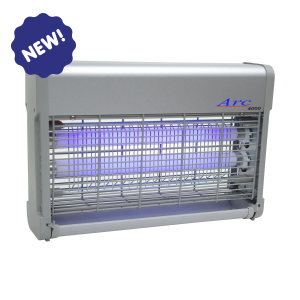
Arc LED 12
£55.00 Price including VAT: £66.00 -
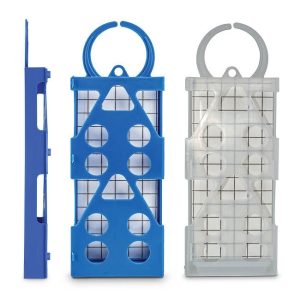
Eradisect Moth Hanger
£6.05 – £7.84Price range: £6.05 through £7.84 -
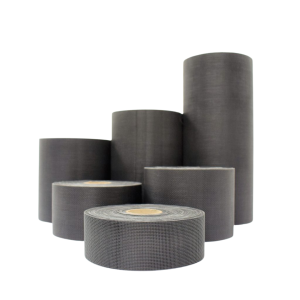
Fibreglass Insect Mesh – 18×16 Gauge
£7.10 – £168.00Price range: £7.10 through £168.00 -
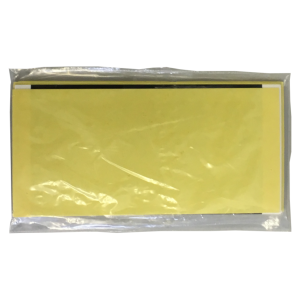
Glue Boards
£6.00 Price including VAT: £7.20 -
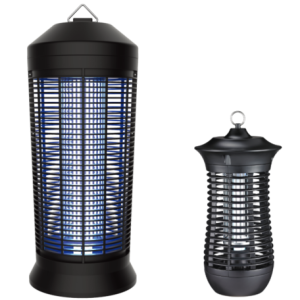
Lanterns
£27.00 – £62.00Price range: £27.00 through £62.00 -
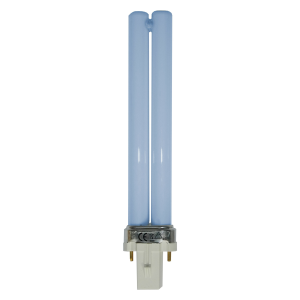
Lynx 2 Pin 9w UVA Lamp
£4.00 Price including VAT: £4.80 -
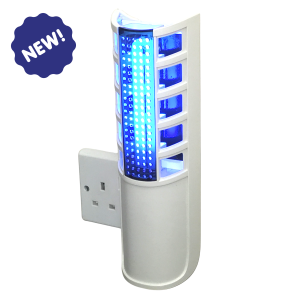
Plug In Fly Catcher
£17.00 Price including VAT: £20.40 -
Sale!
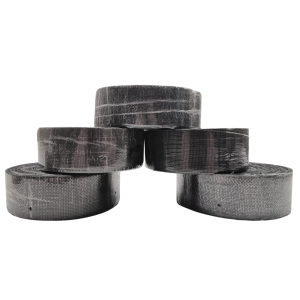
SPECIAL – End of Roll – 45mm to 65mm Widths
£10.00 – £40.00Price range: £10.00 through £40.00