Birds

Aves

Basic Overview

Birds are among the most familiar and important animals in the UK. Belonging to the class Aves, they are found in nearly every environment — from gardens and cities to woodlands and coastlines. Birds play a vital role in nature by controlling insects, spreading seeds, and supporting healthy ecosystems.

There are around 600 species recorded in the UK, ranging from small garden visitors like robins and sparrows to larger species such as pigeons and gulls.

Identification and Characteristics

Birds are easy to recognise by their feathers, beaks, and ability to fly. Most have lightweight bodies with hollow bones, excellent eyesight, and a wide variety of calls or songs that help identify them.

Size: Ranges from the 9 cm wren to the 1 m heron or gull.
Distinct features: Beaks adapted to diet (seeds, insects, or fish), feathers for insulation and flight, and keen vision.
Habitat: Gardens, rooftops, eaves, trees, cliffs, and even urban buildings.
Diet: Seeds, insects, fruit, nectar, or small animals — depending on the species.

Common Species Found Near Homes


  • House Sparrow (Passer domesticus) – small, brown-grey; often nests in eaves or roofs.

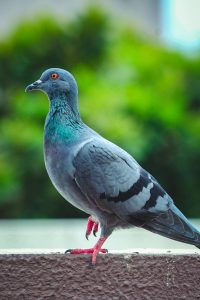
  • Pigeon (Columba livia domestica) – medium-sized, grey with iridescent neck; common in cities.

  • Starling (Sturnus vulgaris) – dark with glossy speckles; nests in roof spaces or vents.

  • Swallow (Hirundo rustica) – slim with forked tail; builds mud nests under eaves.


Bird Breed - Pigeon
Common UK Pigeon

Life Stages

Birds have a simple life cycle: egg → chick → fledgling → adult.

  • Egg: Laid in a nest, incubated by one or both parents.

  • Chick: Hatches blind and featherless in most species; fed by parents.

  • Fledgling: Grows feathers and learns to fly.

  • Adult: Fully independent and capable of breeding.

Activity period: Most nesting occurs between March and August, though pigeons may breed year-round in cities.

Impact

While birds are an essential part of the UK’s natural environment, helping to control insects, disperse seeds, and maintain ecosystems, some species can also become pests when they live or nest close to people.

Certain birds — particularly pigeons, gulls, starlings, and sparrows — can cause problems around homes, businesses, and public spaces due to fouling, noise, and structural damage.

Positive Impacts

  • Pest control: Many birds feed on insects and garden pests.

  • Seed dispersal: Help plants regenerate naturally.

  • Pollination: Some species assist in spreading pollen.

  • Biodiversity: Contribute to balanced, healthy ecosystems.

Negative Impacts (in Human Environments)

Structural damage:

  • Nests can block gutters, vents, and chimneys.

  • Droppings are acidic and can corrode stone, paint, and metal.

  • Roofs or solar panels may be damaged by nesting activity.

Health risks:

  • Bird droppings may contain harmful bacteria such as Salmonella or E. coli.

  • Nests can harbour mites, fleas, or ticks.

  • Dropping dust may cause respiratory irritation when disturbed.

Noise and nuisance:

  • Gulls and starlings can be loud during breeding season.

  • Scavenging birds may spread litter and food waste.

Agricultural damage:

  • Birds may eat or contaminate crops, fruit, and animal feed.

How to deal with Birds

Prevention

If you find yourself with an bird problem, here are a few actions you can take before any treatments.

  • Seal entry points: Close gaps in roofs, soffits, and vents before nesting season.

  • Use deterrents: Fit bird spikes, mesh, or humane visual deterrents.

  • Keep outdoor areas clean: Secure bins and remove food waste to reduce attraction.

  • Trim vegetation: Limit easy access to eaves and ledges.

Removal and Control

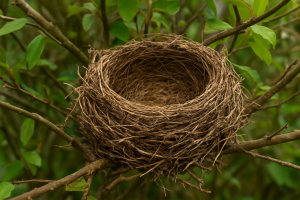
Birds Nest UK

Most UK bird species are protected by law under the Wildlife and Countryside Act 1981, which means that active nests must not be disturbed. If birds are nesting around your property, it’s best to wait until the chicks have fledged before carrying out any cleaning or maintenance.

For safe and humane removal, contact a licensed bird control professional who can advise on the best approach. When cleaning droppings, always wear gloves and a mask, and dampen the area first to reduce dust and potential health risks. Once the site is clean, install deterrents or netting to help prevent birds from re-nesting in the same location.

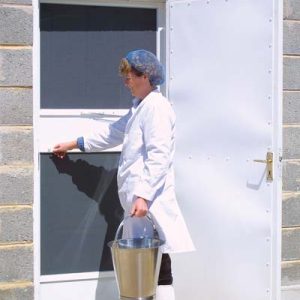
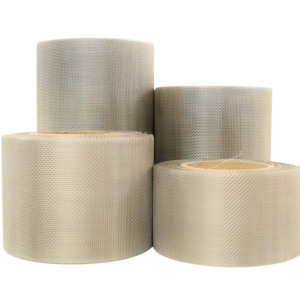
Another useful option for reducing unwanted bird activity around your home is to install flyscreens on windows and doors. While these are mainly designed to keep out insects such as flies and wasps, they can also help prevent small birds—especially fledglings or curious species—from accidentally flying indoors. Flyscreens act as a simple physical barrier, making it harder for birds to enter through open windows or gaps around the frames. When used alongside other preventive measures—such as sealing roof cavities, capping chimneys, and keeping windows closed near nesting sites—they can contribute to a cleaner, quieter, and more bird-safe environment.

Screens like this can help.

How They Can Help

  • Prevent accidental entry: Flyscreens stop small birds or fledglings from flying indoors through open windows or doors.

  • Limit nesting access: Well-fitted screens and mesh can discourage birds from exploring vents, cavities, or eaves as potential nesting spots.

  • Improve hygiene and comfort: Screens also keep out insects and debris, helping maintain a more comfortable, pest-free home environment.

However:
Birds are not typically indoor pests, and when they do enter buildings, it is usually by mistake. Flyscreens alone won’t stop nesting in areas such as chimneys, gutters, or roof spaces, as birds can still access these through:

  • Gaps in eaves or soffits

  • Open vents or brickwork cracks

  • Uncapped chimneys or roof tiles

If birds are nesting nearby, it’s best to wait until after the breeding season has ended, then contact a licensed bird control specialist for safe and legal removal. Never attempt to block or remove an active nest, as most UK bird species are protected by law.

If you require professional help, head to the British Pest Control Association to find a local pest controller near you.

Explore the range of solutions we have available to help you prevent and manage pest problems effectively. We have a few products detailed below that have been proven to assist with bird problem, but explore our full range here. Whether you’re dealing with ants, rodents, or other common pests, our practical advice and proven treatments can help you protect your home and maintain a cleaner, healthier environment.

Shopping Basket